GenSci R&D Day 2026: Pioneering Innovation From China to the World

Time
2026-11-06

Readership
475
Share


Sharing a passion for scientific innovation and a commitment to patients, GenSci recently brought together global biopharma professionals in Shanghai for its third R&D Day. How can we navigate through the complexity of a foggy landscape? This conference answered three pivotal questions: What unmet clinical needs is GenSci addressing? What underpins its differentiated innovation? And how will it collaborate with global partners to expand the value of innovation?
GenSci R&D Day 2026
01 Overview of GenSci's R&D Strategy and Pipeline
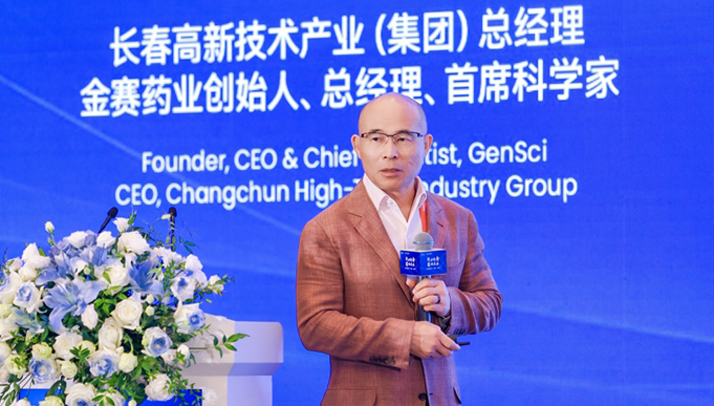
At the event, Dr. Lei Jin, Founder, CEO, and Chief Scientist of GenSci & CEO of Changchun High-Tech Industry Group, reviewed the company's R&D achievements over the past year. Focusing on areas of substantial unmet clinical need, GenSci is building a multi-product, multi-therapeutic-area and globalized R&D system, and has moved beyond its reliance on growth hormone to a portfolio spanning five therapeutic areas: pediatric health and growth, women's health, gout/rheumatology and renal, oncology, and allergy/immunotherapy.
In pediatric health and growth, the company continues to advance its growth hormone toward ultra-long-acting and oral formulations, while exploring additional indications involving children’s health. In gout, rheumatology and renal diseases, it is leveraging Firsekibart Injection as a cornerstone to explore the therapeutic potential of the IL-1 pathway across a range of inflammatory conditions. In oncology, it is pursuing both supportive and targeted therapies, expanding its pipeline across ADC, SM and RLT. In immunology, it is advancing the commercialization of existing products while extending its innovative pipeline into other allergic conditions, including urticaria and asthma.
Dr. Lei Jin, Founder, CEO, and Chief Scientist of GenSci, CEO of Changchun High-Tech Industry Group
"Clinical data is the ultimate arbiter of a product's value," said Dr. Jin. Since the out-licensing agreement with Yarrow Bioscience in December 2025, worth up to USD 1.365 billion, four additional pipeline programs have received FDA clearance for global clinical trials, alongside 27 NMPA IND approvals to date. Five Phase 2 studies in China are progressing steadily, with key data expected in 2027, and 12 innovative molecules have entered Phase 1.
02 Clinical Value at the Center: A Differentiated Pipeline Portfolio
Clinical progress was disclosed across eight programs spanning antibodies, ADCs, small molecules and peptides. GenSci builds matrix-based pipelines around validated mechanisms including the IL-1, GH/IGF-1 and TSHR pathways, creating a full product ladder.
Rebecca Frey, CEO of Yarrow Bioscience
Ophthalmology: Dr. Rebecca Frey, CEO of Yarrow Bioscience, presented the global development plan for GenSci098 (YB-101) in Graves' disease (GD) and thyroid eye disease (TED). "YB-101 offers an entirely new treatment approach through TSHR blockade, which we believe is the most direct way to disrupt the underlying disease process and has the potential to meaningfully improve outcomes for patients living with GD and TED," she said. The overseas Phase 2 study has dosed its first patient, with data due in 2H 2027 and a Phase 2b study to follow in 1H 2028. In China, the Phase 1 trial has shown preliminary efficacy and a favorable safety profile in TED.
Gout: Launched in 2025, Firsekibart is China's first long-acting fully human IL-1β monoclonal antibody for acute gouty arthritis and the only one worldwide delivering six months of targeted anti-inflammatory control from a single injection. GenSci continues to extend the molecule's reach: five additional indications have entered the clinic, and GenSci161, an IL-1α/IL-1β bispecific antibody, has been cleared to begin trials in hidradenitis suppurativa, endometriosis and non-infectious uveitis.
Rheumatology and immunology: GenSci120, a PD-1+ T-cell depleter, has shown an encouraging efficacy trend in a Phase 2b trial in rheumatoid arthritis. GenSci136, a dual BAFF/APRIL antagonist built on a globally first-in-class BCMA trimer fusion protein, offers a new approach for antibody-driven autoimmune diseases such as myasthenia gravis (MG).
Oncology and Cachexia: GenSci pairs supportive care with targeted therapies across multiple modalities, from small molecules and ADCs to radioligand therapy. GenSci140, a FRα-directed biparatopic ADC, could address a broader range of FRα expression levels and overcome resistance, while six-month leuprorelin mesylate injection won NDA approval for prostate cancer in October 2026, with a breast cancer NDA filed.
Xiaojun Liu, CBO of GenSci
Pediatric health and growth: GenSci134, a monthly growth hormone formulation for growth hormone deficiency, and GenSci155, a long-acting IGF-1 analog, are both advancing. GenSci144, a potentially best-in-class SLC6A19 inhibitor currently in a Phase I clinical trial, is being developed for phenylketonuria (PKU) and chronic kidney disease (CKD). Xiaojun Liu noted that GenSci144 has shown strong preclinical efficacy, PK/PD and safety profiles and has achieved first-in-human validation of its target mechanism.
03 Platform-Driven Innovation
GenSci is building an integrated innovation pathway running from technology platforms to differentiated molecules, clinical proof of concept and global value realization, anchored by core platforms:
The ultra‑long‑acting multispecific antibody platform: integrates AI‑driven VHH library to accelerate antibody discovery; leverages antibody engineering to enhance drugability and extend half-life; supports ≥3-month subcutaneous dosing intervals.
A lung-targeting siRNA delivery platform: by inhalation and integrin-mediated cellular uptake to reduce dosing intervals. A diversified pipeline portfolio has been established, which involves indications such as chronic obstructive pulmonary disease (COPD) and idiopathic pulmonary fibrosis (IPF).
Proprietary kidney-targeting siRNA delivery platform: leverages megalin, a receptor that is highly expressed on proximal tubular epithelial cells (PTECs), to enable efficient kidney-targeting delivery and durable gene silencing within the kidneys.
BBB delivery platform: explores the pathways including transferrin receptor (TfR) and the emerging CD98 heavy chain (CD98hc) to realize the rapid and durable brain-targeting delivery.
Together with its Shanghai global innovation headquarters and Changchun manufacturing base, these platforms connect early discovery with clinical validation, regulatory development and commercial-scale production.
04 Connecting Global Partners: An Open Innovation Platform
China-originated innovative medicines are moving beyond out-licensing single assets toward platform partnerships, NewCo structures and co-development. Business development and portfolio leaders from BFC, Takeda, Boehringer Ingelheim, Goodwin, TCGx and RA Capital joined the panel discussion, pointing to "global, differentiated, sustainable" as the defining terms as the sector shifts from fast-follow to first-in-class innovation.
For GenSci, global partnerships are not simply about licensing a single candidate or platform. They are about working with global partners to expand the value of innovative medicines and to drive the continuous iteration of its technology platforms. As the pipeline ladder accelerates toward realization, GenSci will work alongside global partners to bring innovation to the world and maximize its value.
Disclosure Notice:
Innovative drug development entails high risks, and the outcome of clinical trials remains uncertain.
This press release is provided as a medical information source for healthcare experts only and is not used for commercial purposes.
GenSci does not recommend the use of any unapproved drugs or indications.